Hà Nhì people’s efforts to preserve their cultural heritage

ĐBP - At Sín Thầu Commune of Mường Nhé District, the Hà Nhì ethnic community thrives with their rich and unique cultural heritage. Their vibrant traditional attire interwoven with dances, songs, and age-old rituals and festivals are passionately preserved, maintained, and developed.

As one of the 19 ethnic groups residing in the northern mountainous province of Điện Biên, the Hà Nhì people in Sín Thầu predominantly belong to the Hà Nhì Lạ Mí subgroup. Over time, despite changes, they still managed to uphold characteristic cultural traditions such as language, festivals, and social customs. Central to these customs is the distinctive red hue of their traditional garments, a key element in all ceremonies and daily practices.
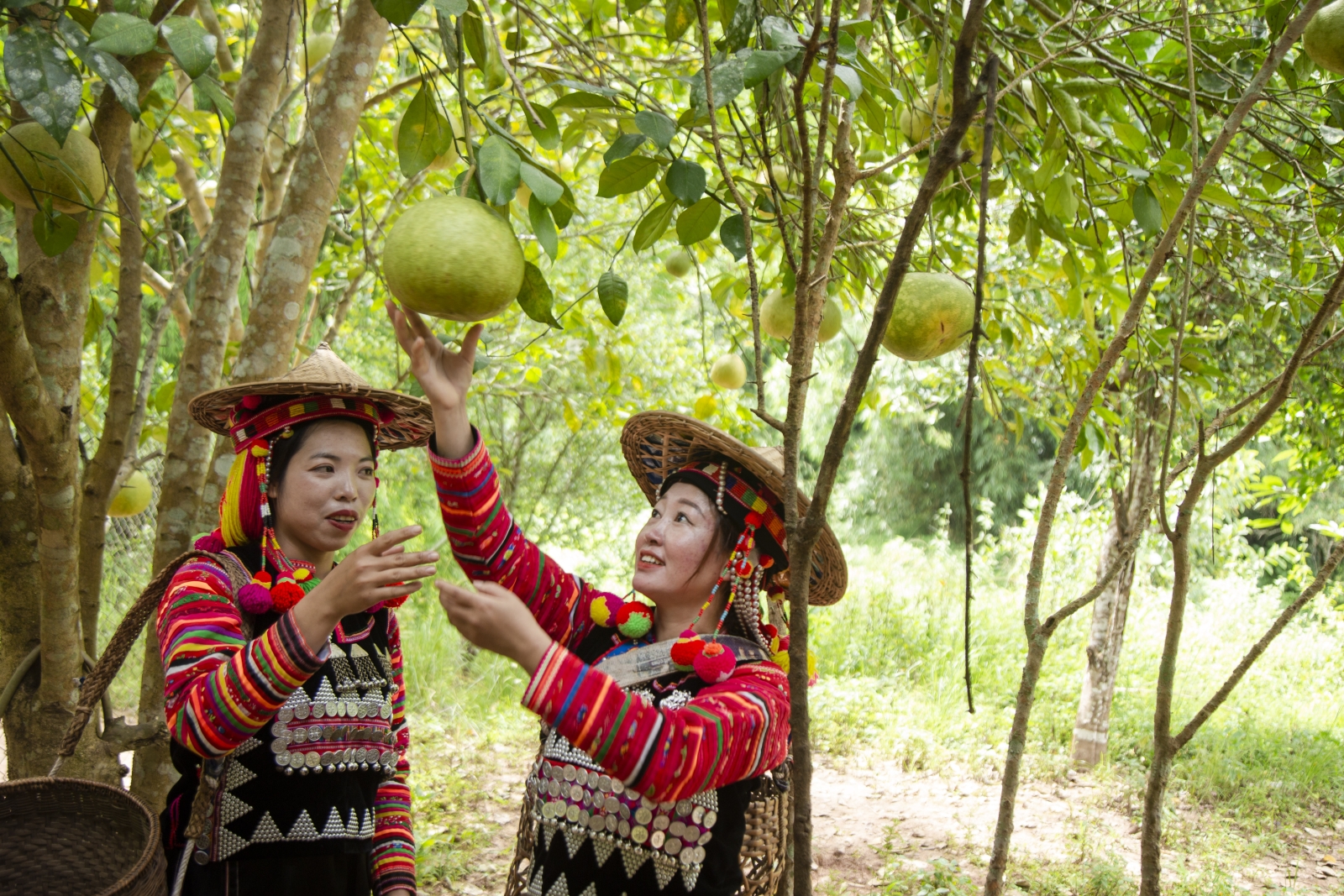
The traditional attire of the Hà Nhì is known for its bright and striking colours.

According to Pờ Mì Sư from A Pa Chải Village, Sín Thầu Commune, every Hà Nhì girl learns the art of making traditional clothing from her elders. Intricate patterns and vibrant colours are carefully handcrafted, symbolising a cherished heritage passed down through generations. For the Hà Nhì people, traditional clothing is an indispensable part of festivities and celebrations.

The preference for warm tones like red and yellow in their garments stems from the chilly, cloud-covered highland environment they inhabit. These bright colours are meant to partly ‘dispel’ the cold here. While the overall design of Hà Nhì women’s attire remains consistent, subtle differences can be observed: younger women's clothing tends to be more vibrant, reflecting youthful vitality, while middle-aged and older women’s attire adopts darker, more subdued tones, symbolising maturity and grace.

A typical Hà Nhì traditional outfit includes a headdress, long tunic, short jacket, and trousers. The headdress comprises elements such as a circular hair wrap adorned with coloured threads, a square cloth with layered multicoloured fabrics, and edges decorated with beads and multicoloured pom-poms. The long tunic features front and side slits, button closures, and sleeves trimmed with warm-toned patterns. The short jacket, worn as an outer layer, is embellished with silver buttons and floral or mountain motifs, standing out against the black fabric with elegance and harmony.
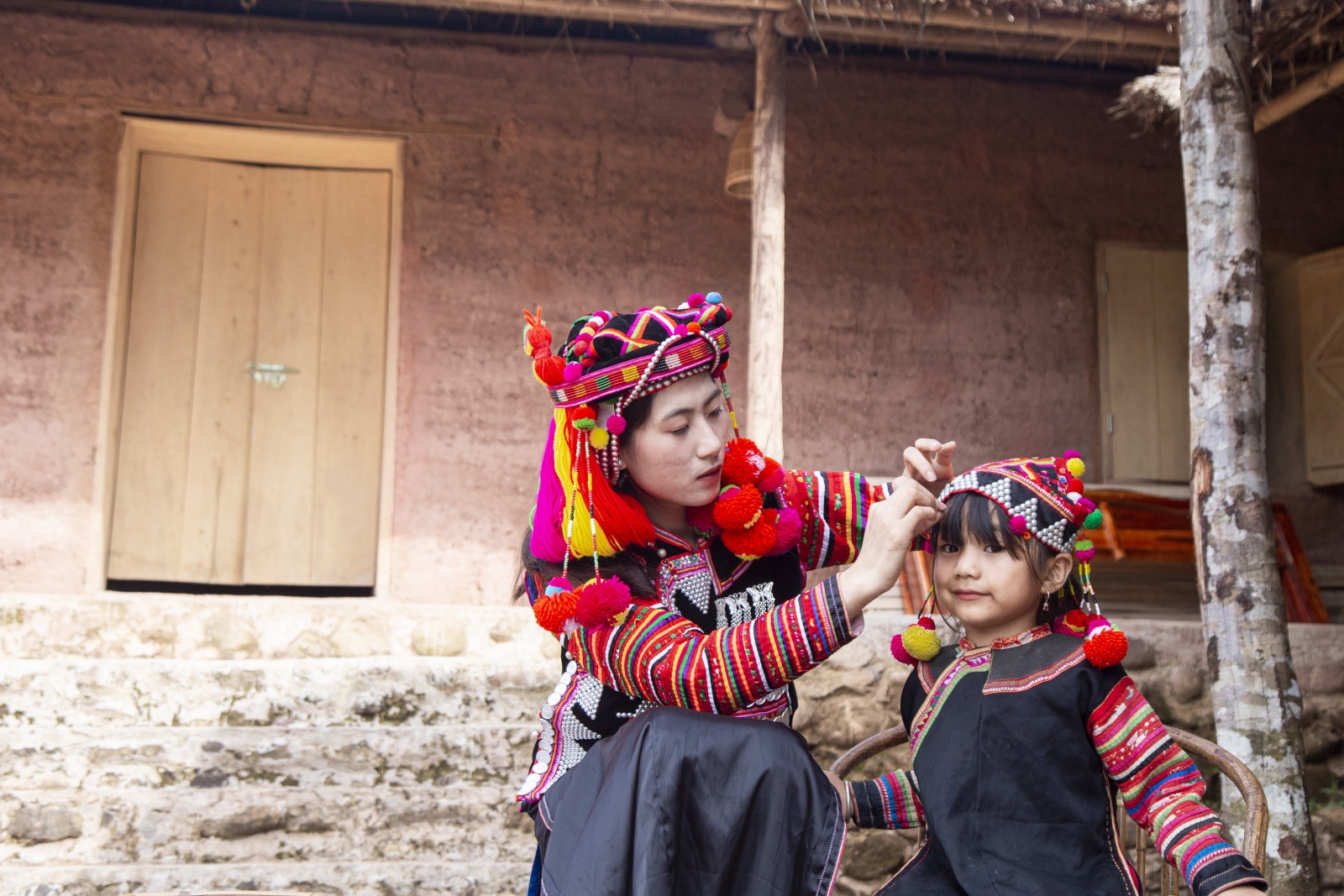
The traditional Hà Nhì outfit includes a headdress, long tunic, short jacket, and trousers with many types of patterns.

According to Khoàng Phu Pứ from Sín Thầu, Hà Nhì women are skilled in sewing their family’s traditional attire. Each piece of clothing is crafted with painstaking effort and artistry. Completing a traditional Hà Nhì outfit can take three to four months. Previously, these garments were made solely for personal use, but with evolving societal demands, they have become valuable commodities. Today, a Hà Nhì outfit can cost around VNĐ6-8 million (US$236-314), which not only boost local people’s incomes but also helps promote the preservation of Hà Nhì people’s cultural heritage.
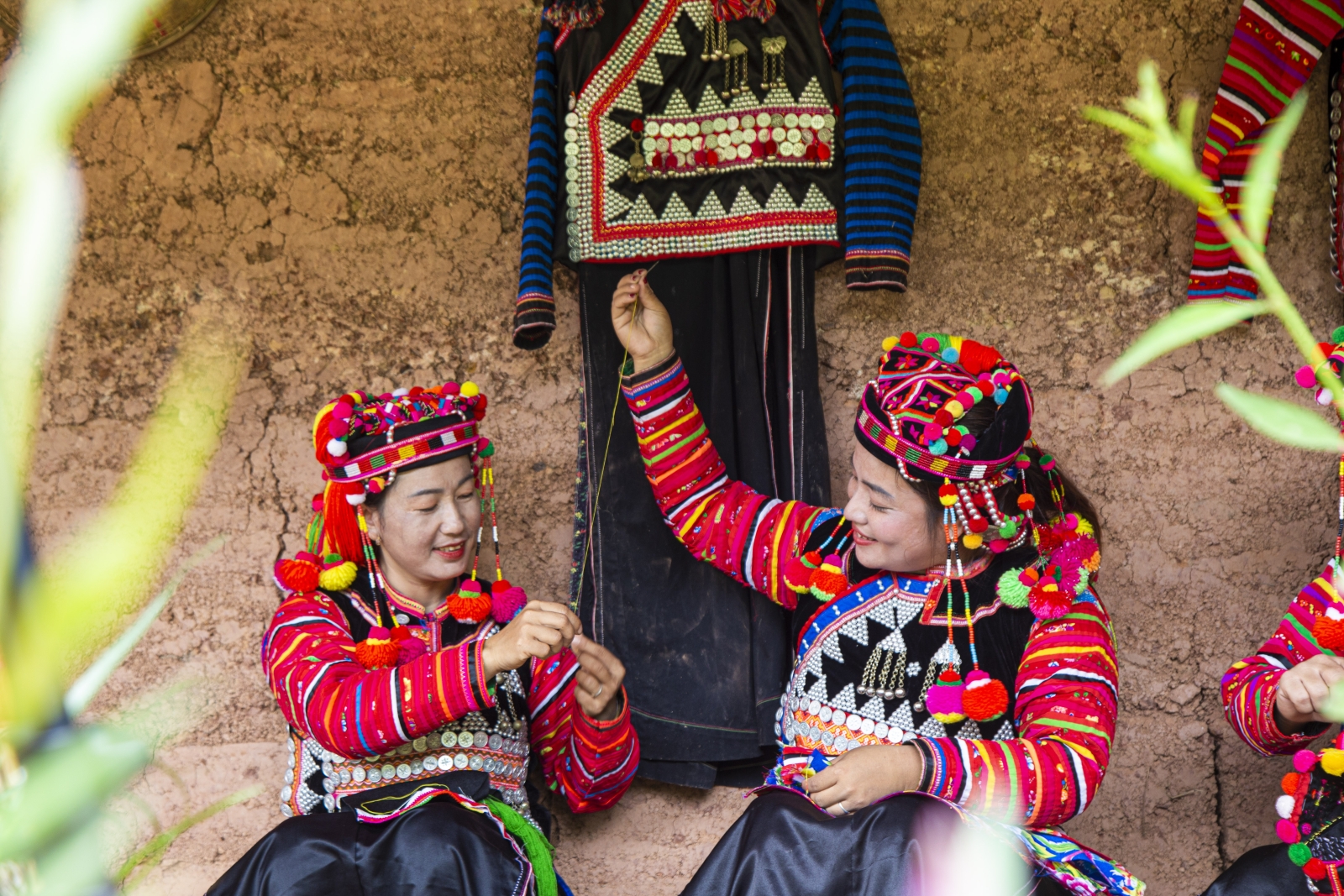
Hà Nhì women weaving patterns on their clothes.

The Hà Nhì people celebrate numerous festivals, including the Village Worship Festival (Gạ Ma Thú), the Rainy Season Festival (Dế Khù Chà), the New Rice Festival (Chế Sự Chà), and their Lunar New Year  festival (Khù Sự Chà). During these events, community members exchange greetings and well-wishes, while young women, dressed in their finest traditional attire, stand out like vivid red blossoms in the country’s western end. In the cultural space of the village, traditions and a strong sense of community are preserved. This is one of the key reasons the traditional culture of the Hà Nhì people continues to be safeguarded and developed.

Pờ Sơn Mé, a member of the Tả Kố Khừ Village arts troupe, shares that in addition to the ceremonies, cultural performances are an integral part of Hà Nhì celebrations. Their performances include drum dances (hừ từ mí xá cự), agricultural dances (ú chà khộ tố mí xà cự), and hat dances (lù hu mí xá cự), reflecting the community’s labour-centric lifestyle. These performances not only provide entertainment for the villagers, but also foster love and understanding of Hà Nhì culture among younger generations.
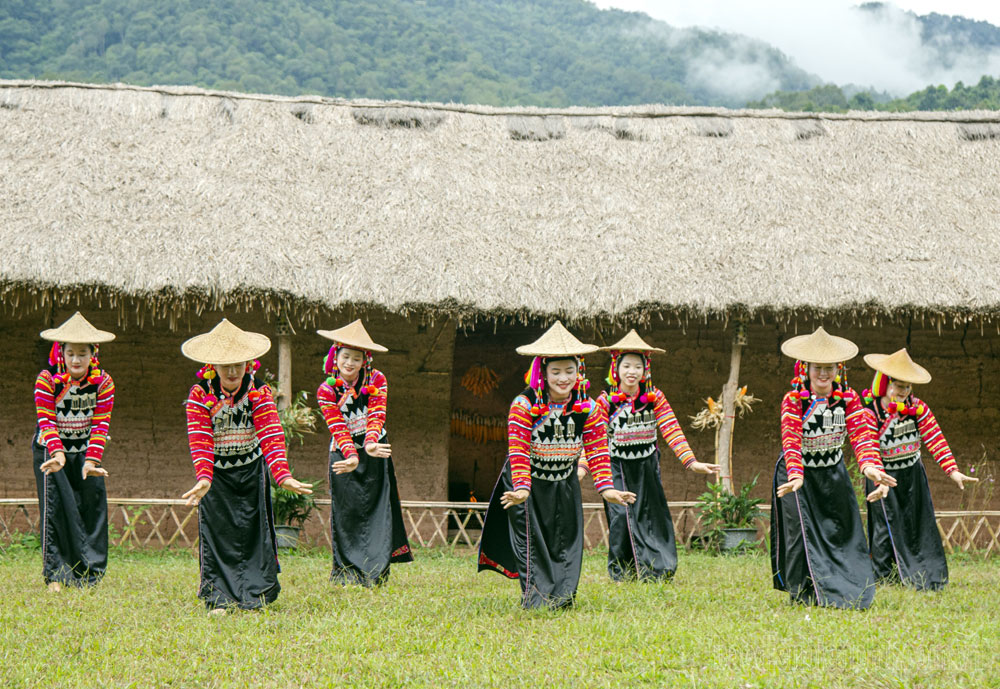
Hà Nhì’s cultural performances are closely tied to their own daily lives and labour.

As modernity advances, the Hà Nhì villages in Sín Thầu are experiencing greater prosperity, but the community here continues to preserve and enrich its traditional culture, contributing to the vibrant mosaic of Điện Biên’s ethnic diversity.

Article & Photos: Trần Nhâm
Comment

You have 500/500 characters left

Please enter 5 or more characters!!!

Recent news

  • 'Sín Thầu: Guardians of forests

    Sín Thầu: Guardians of forests

    ECONOMY -
    ĐBP - “Forests and people rely on each other” is more than just a belief; it has become a deeply rooted awareness and sentiment in the daily lives of people in Sín Thầu. Driven by their love and responsibility for the mountains and forests, ethnic communities in the country’s westernmost region are joining hands to protect every patch of forest and preserve the vast green canopy.
  • 'Điện Biên sees opportunity in carbon credit market

    Điện Biên sees opportunity in carbon credit market

    ECONOMY -
    ĐBP - With its vast forest area, Điện Biên has significant potential to participate in the carbon credit market. Beyond their ecological value, the province’s forests could become a new source of financial resources, contributing to forest protection and restoration, improving local livelihoods and promoting the development of a green economy.
  • 'Consensus drives progress on solar power project

    Consensus drives progress on solar power project

    ECONOMY -
    ĐBP - The Điện Biên 1 Solar Power Plant Project is a large-scale energy development expected to inject vital resources into local socioeconomic growth. To ensure smooth implementation, alongside planning, investment, and execution tasks, mass mobilization and public outreach play a particularly vital role.
  • 'Safer choices: Điện Biên consumers put food safety first

    Safer choices: Điện Biên consumers put food safety first

    SOCIAL AFFAIRS -
    ĐBP - Ensuring food safety is becoming an increasingly important concern for people across Điện Biên province, particularly when it comes to choosing and consuming food on a daily basis. Consumers are gradually changing their buying habits, opting for fresh food with clear origins and choosing reputable businesses and suppliers.
  • 'Điện Biên paves way for “green tourism” development

    Điện Biên paves way for “green tourism” development

    TRAVEL -
    ĐBP - Điện Biên is progressively building its image as a green, friendly, and culturally rich destination. From vast fields, pineapple hills, and fruit orchards to villages steeped in traditional culture, all levels, sectors, and localities alongside residents have opened up pathways for green tourism development, contributing to generating livelihoods, elevating incomes, and preserving the indigenous values of the locality.
  • 'Footsteps heading to villages in Sín Thầu

    Footsteps heading to villages in Sín Thầu

    NEWS - POLITICS -
    ĐBP - Following the merger of three communes (the former Sín Thầu, Leng Su Sìn, and Sen Thượng), the new Sín Thầu commune now spans a wider administrative territory, bringing an increased workload for cadres and higher demands.
  • 'Điện Biên assigns growth scenarios to departments, sectors, communes, wards, and units

    Điện Biên assigns growth scenarios to departments, sectors, communes, wards, and units

    ECONOMY -
    ĐBP - On August 18, the Điện Biên provincial People’s Committee organized a conference to achieve consensus on assigning economic growth scenarios to provincial departments, sectors, communes, wards, and related units. The conference was conducted in a hybrid format, held in person at the provincial bridge point and connected online to 45 bridge points across communes and wards throughout the province.
  • 'Early detection, timely action against abuse of religious affairs

    Early detection, timely action against abuse of religious affairs

    NEWS - POLITICS -
    ĐBP - The abuse of religious beliefs and religion can begin with information designed to exploit people’s faith and circumstances, before developing into efforts to recruit and influence their behavior. Early identification and a clear distinction between those who have been influenced and those who are exploiting religion are essential to preventing and addressing violations in accordance with the law.
  • 'Proactive “four on-the-spot” approach in landslide and flash flood-prone zones

    Proactive “four on-the-spot” approach in landslide and flash flood-prone zones

    SOCIAL AFFAIRS -
    ĐBP - Heavy rains, flash floods, and landslides often develop rapidly and unpredictably, requiring not only immediate disaster responses but proactive early prevention. In Điện Biên province, the “four on-the-spot” motto is concretized by localities through reviewing high-risk points, formulating relocation plans, preparing forces and equipment, and issuing early warnings right from the grassroots level, thereby progressively enhancing proactive response capabilities and ensuring safety for residents in vulnerable areas.
  • 'Provincial Party Secretary Trần Tiến Dũng receives Bokeo delegation

    Provincial Party Secretary Trần Tiến Dũng receives Bokeo delegation

    NEWS - POLITICS -
    ĐBP - On August 16, Trần Tiến Dũng, Member of the Party Central Committee, Secretary of the Điện Biên provincial Party Committee, and Head of the National Assembly Deputy Delegation of the province, paid a courtesy reception to a delegation from Bokeo province (Laos) led by Major General Penkham Boutchanpheng, Member of the Central Committee of the Lao People’s Revolutionary Party, Secretary of the provincial Party Committee, and Chairman of the provincial People’s Council.
  • 'Core force safeguarding national security

    Core force safeguarding national security

    NEWS - POLITICS -
    ĐBP - Upholding the spirit of “serving the people,” the Điện Biên provincial Police consistently take the initiative to stay close to localities, the people, and the grassroots, synchronously deploying crime prevention and control measures, especially across highland and border communes.